
How Long Should You Actually Try Something for Your Gut Before Giving Up?
I stopped taking a probiotic after three weeks. The bloating hadn't obviously improved, I was having a rough couple of days, and it just felt pointless to keep going. That was a couple of years ago now. I still think about it. I still wonder if maybe it was actually doing something.
Figuring out how long to try a gut intervention before giving up is one of the hardest parts of managing IBS. Not because the science is complicated (though it can be), but because most of us make the call based on how we feel that week. Not against any baseline - just mid-bad-patch, when doubt is at its highest.
I kept falling into this with almost every approach I tried. Low FODMAP, probiotics, digestive enzymes. Each time, the decision to stop was emotional, not methodical. What eventually changed things for me wasn't finding a better protocol. It was deciding, before I started anything, exactly what I was testing, for how long, and what working would actually look like.
Why Gut Interventions Are Hard to Evaluate
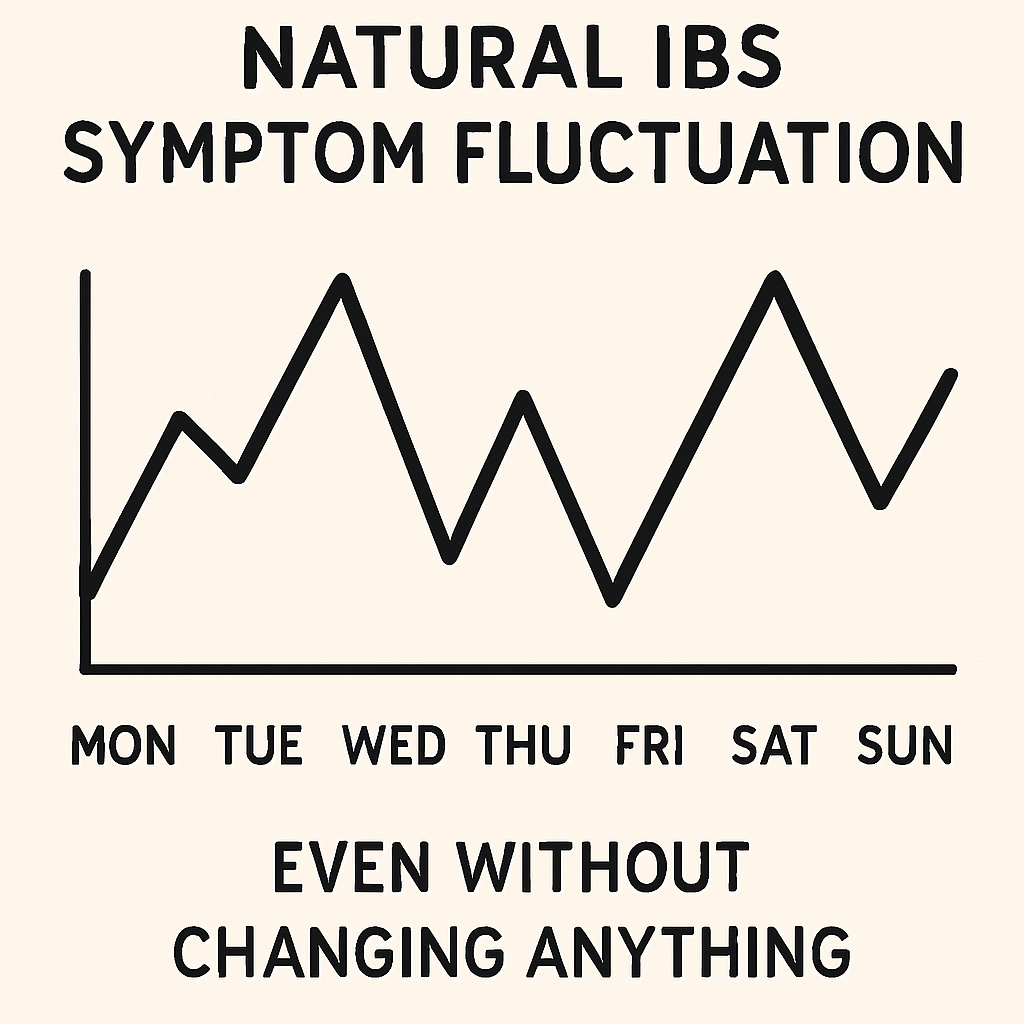
Gut symptoms fluctuate on their own. That's the starting point. Even without changing anything, how you feel on a Tuesday can be completely different from how you feel on a Friday. Stress, sleep, a slightly different meal the day before, a hormonal shift: any of these can trigger a rough few days with no connection to whatever you just started.
The second issue is that different interventions need genuinely different timelines, and most people don't know what those are. Some dietary changes produce a signal in two to four weeks. Probiotics typically need four to eight weeks before any meaningful effect on IBS symptoms would show up in clinical research. Some supplements need eight to twelve weeks.
The third problem is timing. The decision to stop almost always happens during a bad week. That makes sense emotionally: when things feel rough, the doubt spikes. But a bad week might just be normal fluctuation. It's not necessarily telling you anything about the intervention.
⚠️ The urge to quit tends to peak at exactly the wrong moment. Stopping during a difficult patch means you might be calling it before the intervention has had a real chance to show anything.
And without a baseline, "worse than before" might just mean "worse than last week." That's a very different thing.
As Dr. Eamonn Quigley, gastroenterologist and gut microbiome researcher at Houston Methodist Hospital, has noted: the main challenge in evaluating IBS therapies isn't whether they work, it's that most people don't give them a long enough, structured enough trial to find out.
The Missing Step: Deciding Before You Start
The change that helped me most was front-loading the decisions. Not mid-trial, but before starting.
Decision 1: Track a baseline first
Spend one to two weeks logging your main symptoms before starting anything. Bloating severity on a 1–10 scale, time of bloating, is it upper abdomen or lower belly or all are, how often you're uncomfortable, bathroom patterns. Worth tracking more than food and bloating too, since stress, sleep, and hormones all move the needle (what a fuller baseline actually looks like).
Decision 2: Set the trial window in advance
Look up the evidence-based window for whatever you're trying, then commit to a real end date before you start.
| Intervention | Typical trial window |
|---|---|
| Low FODMAP (elimination phase) | 4–6 weeks |
| Probiotics for IBS symptoms | 4–8 weeks |
| Gut-supporting supplements | 8–12 weeks |
| Elimination protocols | 3–6 weeks, then reintroduction |
Not a vague "I'll give it a few weeks." A specific date you decided before you started.
Decision 3: Define success in advance
"I'll know this is helping if bloating is below 4/10 on at least four days per week" is useful. "I'll see if I feel better" is not. Vague criteria mean the decision at the end of the trial will still come down to how you feel on the day you check in.
💡 Worth knowing: Pre-setting an end date also stops the opposite problem: extending a trial indefinitely when nothing is happening, just hoping something will eventually change. That's as worth preventing as quitting too early.
🔎 If you're trying to figure out what's actually worth trying next: Noorish builds you a structured action plan based on your full symptom history, so you're working from a real picture of what you've already tried and what the next logical step is. Start here →
When You've Already Started Without a Baseline
Most people reading this are probably already mid-trial. That's fine.
If you have no baseline at all, the cleanest option is a washout period. Stop, track your symptoms for two weeks without any intervention, then restart. It feels annoying in the moment, but you end up with a real comparison point instead of a guess.
If you've been going for a while with no signal whatsoever: that's information. A genuine absence of effect after a full evidence-based trial window is a result. That's one of the clearest versions of what I'd call a failure pattern (more on reading what a "didn't work" result is actually telling you).
| Situation | What to do |
|---|---|
| Mid-trial, no baseline | Consider stopping, tracking 2 weeks, restarting |
| Completed full window, no change | Stop. That's a valid answer. |
| Completed full window, mixed results | Log the specific symptoms that shifted and those that didn't |
| Well past the window, still unsure | Set an endpoint now and evaluate on that date |
Conclusion
It's a small shift, but it changes what you're actually doing. Instead of evaluating the intervention against how you happened to feel today, you're comparing a full trial period against a tracked baseline and criteria you set in advance. It sounds like more work upfront. But it's less exhausting overall, because you stop second-guessing every single day.
You also stop carrying that "what if that was actually working" feeling. Which is its own kind of mental load.
How long to try something for your gut depends on what you're trying. But the more important question is: what are you comparing against when the trial ends?
That's where having a structured record actually matters. Noorish is built for exactly this: you put in your symptom history, what you've tried, and when. You get a science-based action plan that tells you what to try next based on your full picture, not a guess based on today. If you're in the middle of figuring out what's actually working, it's worth looking at.
🔎 Noorish: Gut Health Action Plan
Stop guessing at protocols. Know what to try next based on your actual history.
- ✅ Build a structured gut symptom history to share with your doctor
- ✅ Understand what's actually driving your symptoms
- ✅ Get a science-based action plan for what to try next
- ✅ Optional: validation from a real nutritionist
How long should I try the low FODMAP approach before deciding if it's working?
The standard elimination phase is four to six weeks. Most evidence recommends at least four weeks before drawing any conclusions. If you've been strict for six weeks and seen no change at all, that's worth discussing with a gut health practitioner, because low FODMAP doesn't address every underlying cause of IBS symptoms. (Common low FODMAP mistakes worth ruling out first →)
How long does it take for probiotics to start working for IBS?
Most research puts the window at four to eight weeks for probiotics to show a meaningful effect on IBS symptoms. Some people notice earlier shifts. If you're past eight weeks with no change, the strain or dose probably isn't the right fit for you.
When should I stop trying a diet change if it's not working?
If you've completed the full evidence-based trial window (usually four to six weeks for most elimination approaches) and tracked zero signal in your logged symptoms, that's a clear enough result. The key word is "tracked." You want to be comparing data, not memories.
How do I know if a gut supplement is actually doing anything?
Track specific, measurable symptoms before you start and throughout the trial. At the end, compare them against your baseline honestly. If there's no difference between your tracked data then and now, that's your answer.
How long does it take to see improvement from gut health changes?
It depends on what you're changing. Dietary shifts can produce an early signal in two to four weeks. Supplements typically take longer. The more important variable, though, is whether you have a baseline to compare against. Without one, even real improvement can be invisible.
Is 2 weeks long enough to know if a probiotic is working?
For most probiotic strains targeting IBS symptoms: no. The evidence-based minimum is typically four weeks, with eight weeks being a more reliable window for drawing conclusions. Two weeks is enough to spot obvious adverse reactions, but not enough to evaluate whether the probiotic is actually doing anything.