
Why Your Food Diary Isn't Giving You Answers (And What to Track Instead)
Keyword: IBS food diary not working, how to track gut health
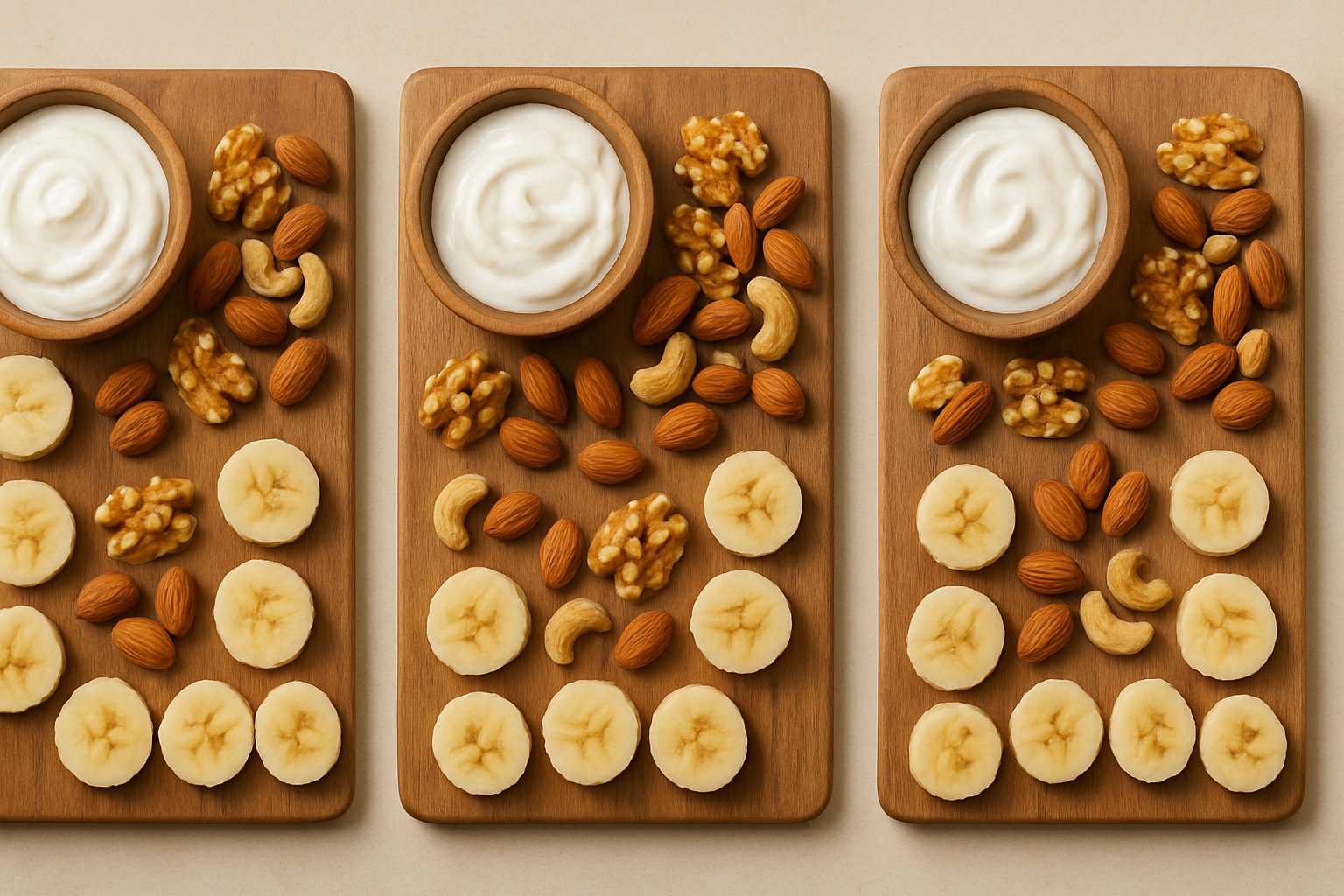
I ate the same breakfast four days in a row once: nuts, banana, and coconut yogurt. Monday, totally fine. Tuesday, fine. Wednesday, bloated and doubled over by 11am. Thursday, fine again. I went back to my food diary looking for what changed. Nothing had. Same bowl, same portion, same time.
The thing is, your gut symptoms aren't just responding to what you ate. They're responding to the state your gut was already in when you ate it. Here's what's actually driving the randomness.
Why Food-Only Diaries Miss Most of the Picture
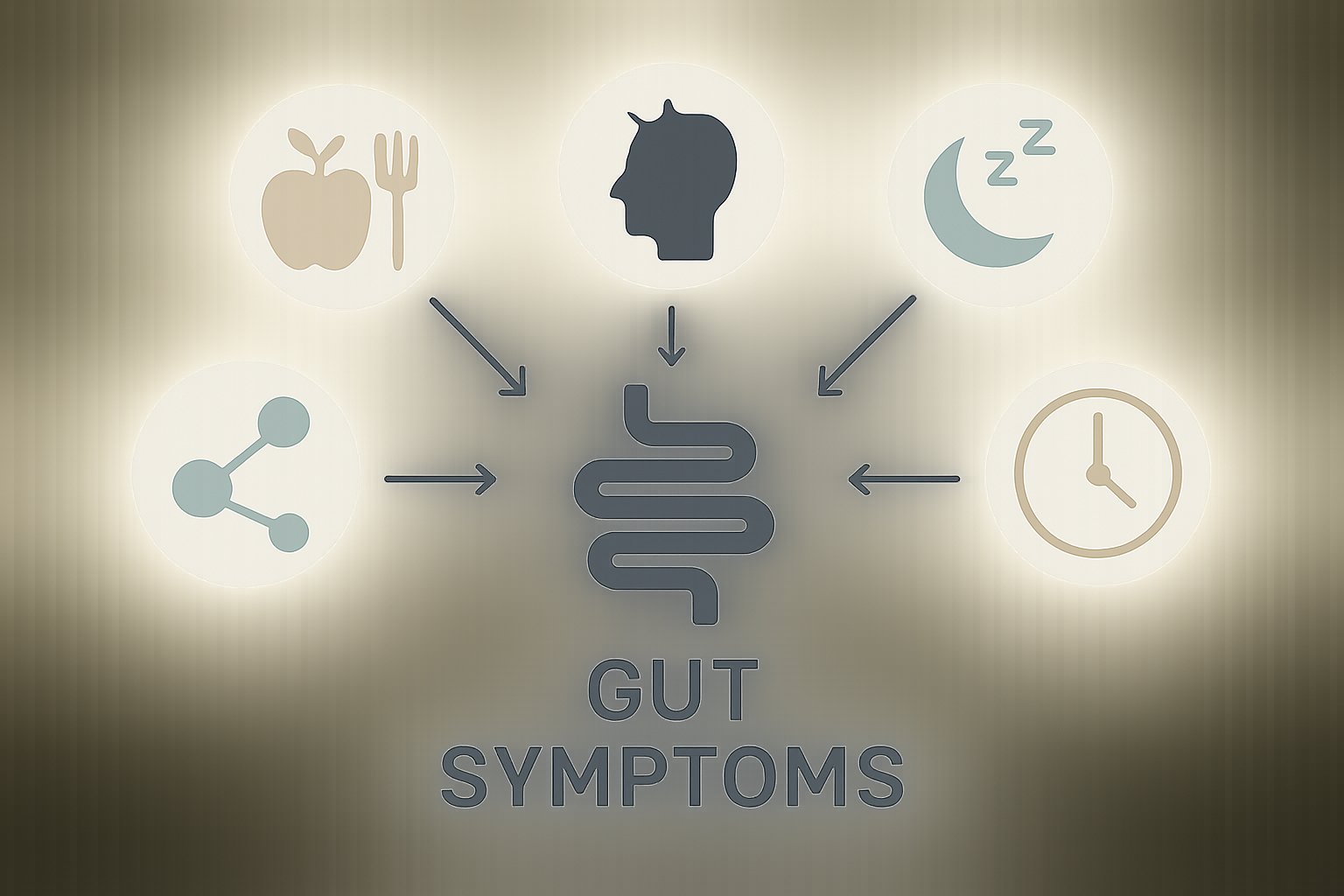
A food diary assumes one thing: that food is the variable that explains your symptoms. For a lot of people with IBS symptom triggers, that assumption is just wrong. Food is one input among several, and it's often not even the loudest one.
Stress is a real, physical input, not a footnote. The gut-brain axis isn't a metaphor. Cortisol changes gut motility, gut permeability, and how sensitive your gut is to normal amounts of gas or stretching. A stressful morning can turn a meal that's fine every other day into a bad afternoon. Dr. Emeran Mayer, a UCLA gastroenterologist who's spent decades researching this connection, put it plainly: "Perceived stress and negative emotions don't stay in the brain. Your gut and the microbes living there will respond to such negative mindsets in a way that is not good for your body or brain".
Sleep is doing more than you think. Poor sleep disrupts gut motility and shifts the balance of your microbiome. A rough night often shows up as a rough gut day.
Hormones move the needle too. For a lot of people who track long enough, gut symptoms line up closely with their cycle. Research on hormonal fluctuation shows progesterone and prostaglandin shifts can change gut motility and sensitivity, contributing to constipation in some phases and looser stools in others.
Timing and cumulative load matter. Gut symptoms are often less about one specific food and more about the total load on your system that day. How much you've eaten, how spaced out it was, how active you've been.
⚠️ If you're only logging food and symptoms, you're comparing two data points and ignoring the four or five that actually explain the gap.
The Problem With 2-Week Food Diaries
Even a well-kept food diary usually fails for a second reason: it's too short.
Most food diaries get started during a flare. That means you're capturing the exception, not your normal baseline, right from day one. Two weeks also isn't long enough to catch slower-moving variables. A hormonal cycle runs about a month. Microbiome shifts happen over weeks, not days. Two weeks of data can't show you a pattern that takes longer than two weeks to repeat. (This is the same trap that shows up with any gut intervention, not just tracking — here's more on why the trial window matters so much.)
Patterns need repetition to count as signal instead of noise. One correlation could be coincidence. The same correlation showing up four separate times, across different weeks, in different conditions, is something you can actually act on.
| Tracking window | What it can realistically show you |
|---|---|
| 1–2 weeks | Obvious, severe reactions only. Misses slow variables entirely. |
| 3–5 weeks | Starts to catch weekly rhythms, but still too short for hormonal cycles. |
| 6–8 weeks | Enough repetition to separate real patterns from noise, and enough time to see a full hormonal cycle. |
🔎 If two weeks of logging hasn't given you an answer, that's not a sign to stop, it's a sign the window was too short. Noorish builds a structured action plan from your full symptom history, not just the flare weeks. Start here →
What to Track Instead (Or in Addition)
Once food stops being the only variable, the tracking framework gets bigger, but not necessarily harder. Here's what's actually worth logging alongside meals:
- Symptom severity and type. Bloating, pain, and urgency are different problems with different causes, and lumping them all into "bad gut day" hides the pattern.
- Stress level. Even a rough 1 to 5 rating, logged daily, is more useful than nothing.
- Sleep quality and duration, not just hours, how rested you actually felt.
- Hormonal cycle phase, if applicable. This one gets skipped constantly and it shouldn't.
- Bowel habit consistency, using the Bristol stool scale. It's the standard clinical tool for a reason, it gives you a consistent language for something that's otherwise hard to describe (source: clinical gastroenterology literature on IBS symptom classification).
- Meal timing and portion size, not just what was on the plate.
- Energy level, which often tracks closely with gut state and is an easy pattern to spot in hindsight.
| Old food diary | Multi-variable tracking |
|---|---|
| What I ate | What I ate, when, how much |
| Symptom: yes/no | Symptom type, severity, timing |
| Nothing else | Stress, sleep, cycle phase, energy |
A pattern this actually catches: someone whose bloating looks totally random against food alone, but lines up almost exactly with the week before their period, every single cycle, once it's logged for two months straight. Once you've got that much data, pulling it into one place where you can actually see it matters as much as collecting it.
💡 A symptom severity scale (even just mild/moderate/severe) is more useful long-term than a strict yes/no log. Random-feeling symptoms are often just under-described ones.
💡 If you can only add one non-food variable this week, make it sleep. It's the easiest one to log consistently, and for a lot of people it turns out to correlate with symptoms just as much as any food does (source: research on sleep and gut motility/microbiome composition, NCBI).
The Reframe
The goal was never to find the one bad food. For most people with IBS, there isn't one. The goal is understanding the conditions under which your gut struggles, and food is just one of those conditions, sitting next to stress, sleep, hormones, and timing.
Once you're tracking the full picture instead of just meals, "random" symptoms usually stop being random. They start looking like a gut that's more sensitive on low-sleep days, or worse a few days before your cycle, or fine with the same lunch except on days you skipped breakfast and ate late. (If you're stuck at the "read one more article" stage instead of the tracking stage, that's worth addressing first.)
If you want a structured way to build that full picture instead of piecing it together across notes apps and memory, Noorish turns your symptom history into an actual action plan.
Follow on Instagram for more on figuring out gut symptoms without guessing.
🔎 Noorish: Gut Health Action Plan
Tracked food for months and still can't find a pattern? Noorish looks at your full symptom history, not just meals, and builds a plan for what to investigate next.
- ✅ Build a structured gut symptom history to share with your doctor
- ✅ Understand what's actually driving your symptoms
- ✅ Get a science-based action plan for what to try next
- ✅ Optional: validation from a real nutritionist
FAQ
Why is my food diary not helping me find IBS triggers?
Because food is usually only part of what's driving your symptoms. Stress, sleep, hormonal cycle, and meal timing all affect gut motility and sensitivity. A diary that only logs food is comparing the wrong variables and will look "random" even when there's a real pattern underneath.
What should I track for gut health besides food?
Stress level, sleep quality, hormonal cycle phase, bowel habit consistency (Bristol scale), meal timing and portion size, and energy level. Symptom severity and type matter more than a simple yes/no log.
How long does it take to find IBS triggers?
Most people need 6 to 8 weeks of consistent tracking to separate real patterns from noise. Two weeks usually isn't enough, especially for slower-moving variables like hormonal cycles or microbiome shifts.
Should I track stress and sleep for IBS?
Yes. Cortisol directly affects gut motility, permeability, and pain sensitivity, and poor sleep is linked to both motility changes and microbiome shifts. Both are frequently bigger drivers of a bad gut day than the meal itself.
What is the best way to track IBS symptoms?
Log more than food: symptom severity and type, stress, sleep, cycle phase, bowel habits, and timing, over at least 6 weeks. A single combined view is more useful than separate notes scattered across apps.
Why are my IBS symptoms so random and unpredictable?
They usually aren't actually random. They just look that way when you're only comparing symptoms to food. Once stress, sleep, and hormonal timing are added to the picture, most people find the "randomness" has a shape after all.