
Low FODMAP Mistakes Nobody Talks About
One of the low FODMAP mistakes I made early on was thinking the diet was doing something it wasn't. I was careful. I checked the Monash app before eating anything. I cut out everything on the list. And I was still bloated, still uncomfortable, still flaring after weeks of doing it "right."
Nobody explained why it was happening. The low FODMAP diet doesn't cure gut overgrowth. It manages the symptoms that come from feeding bacteria in your gut. Those two things feel similar from the inside but they point to completely different next steps.
There are a few things standard FODMAP content skips. Stuff you piece together on your own, or hear from people in the SIBO community who've already been through it. That's what this covers.
Low FODMAP isn't fixing your SIBO. It's showing you what feeds it.
The way I understood low FODMAP for the longest time: if I stuck to it, my gut would heal. I figured the bacteria would starve out. I ate plain, restricted food for months waiting for that to happen.
What actually happens is different. Low FODMAP removes fermentable carbohydrates from your diet. When bacteria in the small intestine feed on those carbs, they produce gas, which causes bloating and pain. So when you cut the carbs, you cut the gas. Symptoms quiet down. But the overgrowth is still there.
This is why people still have SIBO after months on the diet. The protocol (antibiotics, herbals, whatever your approach is) addresses the overgrowth. Low FODMAP is support. It can reduce fermentable substrate during an active protocol and help you find personal triggers. But it is not doing the core work.
⚠️ A lot of mainstream FODMAP content leaves out this distinction. If your only guidance is a general IBS article, you may be missing the bigger picture of what the diet is actually for.
Noorish builds a structured gut health action plan based on your full symptom history, including which protocols you've tried and where you are in the process. The diet is one piece, not the whole plan: getnoorish.com
Timing with antimicrobials changes everything
Most low FODMAP content is written for IBS, not SIBO. So timing relative to antimicrobial treatment never comes up. But for people doing an active protocol with antibiotics like rifaximin or herbal antimicrobials, when you use the diet matters. If you're in the window right after finishing a protocol, here's what actually matters in those first few weeks.
During antimicrobials: Some people use low FODMAP alongside treatment. The idea is that you're reducing fermentable food at the same time you're reducing bacteria, so there's less substrate available. The evidence on whether this improves outcomes is limited, but the logic holds. (source: Siebecker A., SIBO Center for Digestive Health clinical resources) The challenge is that combining strict treatment and a restrictive diet is hard to sustain over weeks.
After antimicrobials, without reintroduction: This is the most common problem I see. People finish a protocol, feel better, and stay on low FODMAP because they're scared of what happens when they eat normally. But if the protocol worked and the overgrowth is reduced, continued restriction works against recovery. Your gut needs to rebuild microbial diversity, and that requires food variety. (source: Halmos EP et al., Gastroenterology, 2015: showed that low FODMAP significantly reduces gut microbiota diversity over time)
No protocol at all: Some people start low FODMAP without any antimicrobial work. That means managing symptoms indefinitely with no defined treatment phase and no exit point.
⚠️ Watch out: If you've been on low FODMAP for more than 2 months with no reintroduction plan and no active protocol, you may be in an open loop with no way out.
Your triggers might not be FODMAPs
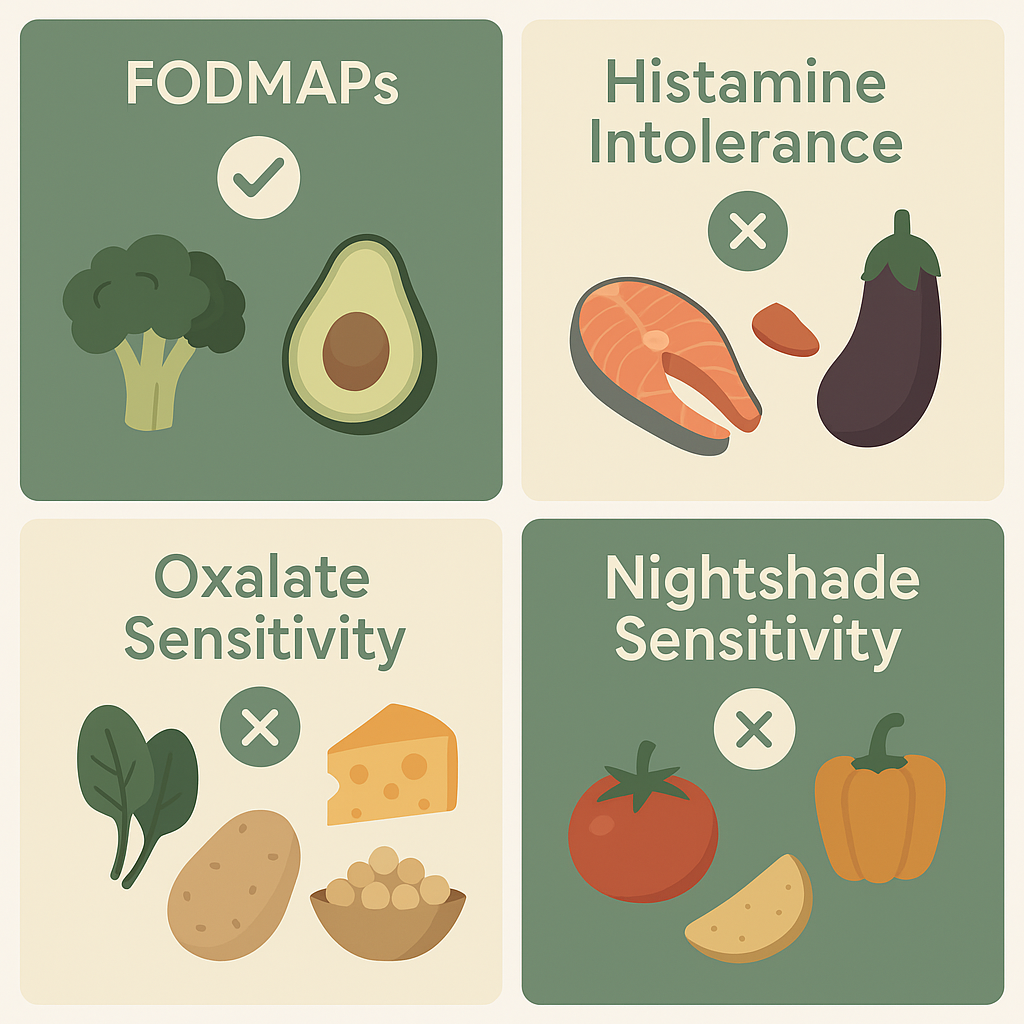
Here's something that took me a while to figure out. You can follow the Monash app perfectly, stick to green-light foods, and still flare. Because some of your actual triggers have nothing to do with fermentable carbohydrates. Food isn't even always the full picture, either — stress, sleep, and hormones can all shape how you react on a given day (more on tracking beyond food).
The Monash app measures fermentable carbohydrate content. It doesn't track histamine intolerance (common alongside SIBO because certain gut bacteria produce histamine directly (source: Maintz L, Novak N. Am J Clin Nutr, 2007)), oxalate sensitivity, nightshade reactions, or other food responses that run through different mechanisms.
If you're eating technically correct low FODMAP foods and still reacting, the question is whether there's a different trigger you haven't looked at. Kate Scarlata, registered dietitian and one of the most widely published FODMAP researchers, has noted that the low FODMAP approach was designed to identify FODMAP-specific triggers. Other sensitivities require separate investigation.
💡 Worth knowing: Histamine intolerance associated with SIBO can persist after successful treatment because the gut microbiome takes time to restabilize. Even when overgrowth is gone, histamine symptoms can continue for a while.
| Trigger type | Covered by Monash app? | Example foods affected |
|---|---|---|
| FODMAP sensitivity | Yes | Garlic, onion, wheat, certain fruits |
| Histamine intolerance | No | Aged cheese, wine, fermented foods |
| Oxalate sensitivity | No | Spinach, walnuts, beets (at low FODMAP serving sizes) |
| Nightshade sensitivity | No | Tomatoes, bell peppers, eggplant |
Reintroduction becomes confusing when multiple sensitivities overlap. If you react when testing fructans, you can't tell whether it's the FODMAP load, the histamine in that food, or something else. Most FODMAP guidance doesn't cover this because it wasn't designed with SIBO in mind.
🔎 If you're trying to figure out what your gut actually needs: Noorish builds a structured action plan based on your full symptom history, so you're working from your actual picture, not a generic food list. Start here →
Being terrified of reintroduction is keeping you stuck
The elimination phase feels safe. You know what you can eat. Your symptoms are mostly under control. The idea of reintroducing food groups feels like deliberately making yourself worse.
I understand this fear. It's also keeping a lot of people from actually learning anything useful.
Reintroduction is the whole point of elimination. Without it, you don't know which FODMAP categories you actually react to, at what serving sizes, in what combinations. You just know eating normally feels bad, which you already knew. The same logic applies to any gut intervention: you need a defined trial window and a way to read the result, not just a vague sense that something is or isn't working (more on how long to actually give something before calling it).
What reintroduction actually looks like: you test one FODMAP category over 3 days at gradually increasing servings, then return to baseline low FODMAP for a washout period (at least a few days, or until symptoms settle) before testing the next one. It's methodical. You're running a controlled experiment. The Monash app has a full reintroduction protocol built in.
💡 Worth knowing: A low FODMAP diet significantly reduces gut microbiome diversity over time, including beneficial species like Bifidobacteria. (source: Halmos EP et al., Gastroenterology, 2015) Reintroduction isn't just about expanding what you eat. It's about giving your microbiome back what it needs.
When low FODMAP becomes the problem

There's a point that can happen where the diet itself becomes a source of stress.
At some point I was checking every label. Anxious at restaurants. I was the person explaining food restrictions before anyone had even looked at the menu. And I was still symptomatic. Which led to more checking, more restriction, more anxiety about eating anything at all.
The low FODMAP diet was designed as a 6 to 8 week elimination tool. Most clinical guidance says this clearly. But a lot of people end up on it indefinitely when there's no one walking them through reintroduction.
⚠️ Watch out: The longer you stay in elimination without a defined endpoint, the harder reintroduction becomes, and the more likely the diet is to take on psychological weight it wasn't designed to carry.
If any of that sounds familiar, the goal isn't to push through and start eating high FODMAP foods anyway. The goal is to find a structured path through reintroduction with some support, and to start treating the anxiety around food as part of what needs addressing, not just a side effect to push past.
The bigger picture
Low FODMAP is a genuinely useful tool. A lot of people find real relief from it, especially during active flares or while doing a protocol.
But it's a tool. It tells you something about how your gut responds to fermentable carbohydrates: it doesn't fix an overgrowth, doesn't catch every trigger, and wasn't designed to run indefinitely without a reintroduction phase.
If you've been doing it for months and still feel stuck, the issue usually isn't the diet. The more useful questions are: is the underlying overgrowth being addressed? Have I started reintroduction? Are there other sensitivities worth looking at?
That's where having a structured record actually helps. Noorish takes your full gut symptom history and builds a science-based action plan for what to try next. Not just another list of foods to cut. A way to see the full picture and figure out where you actually are. If you're at the "what do I do next" stage, it's worth looking at.
🔎 Noorish: Gut Health Action Plan
Still on low FODMAP months later with no clear next step? Here's a more structured approach.
- ✅ Build a structured gut symptom history to share with your doctor
- ✅ Understand what's actually driving your symptoms
- ✅ Get a science-based action plan for what to try next
- ✅ Optional: validation from a real nutritionist
FAQ
Why is my low FODMAP diet not working?
Most likely because the diet was managing symptoms without addressing the underlying cause. For SIBO, low FODMAP reduces bacterial substrate but doesn't clear overgrowth. It can also stop working if you have overlapping sensitivities like histamine intolerance that the diet doesn't screen for.
Is the low FODMAP diet a long-term solution for SIBO?
No. It was designed as a short-term elimination phase (2 to 6 weeks) followed by structured reintroduction. For SIBO specifically, it works best alongside an active protocol. Using it as a standalone, indefinite approach keeps you managing symptoms with no endpoint.
Can I do the low FODMAP diet without a dietitian?
You can, especially with the Monash app. The reintroduction phase is where most people get stuck without guidance. A FODMAP-trained dietitian helps you interpret reactions and move through reintroduction systematically. If that's not accessible, Noorish can help you build a structured plan with your full history as context.
Should I avoid gluten on the low FODMAP diet?
Not specifically for FODMAP reasons. Gluten itself isn't a FODMAP. The issue with wheat is fructan content. Sourdough wheat is often better tolerated because fermentation reduces fructan levels. If you have a separate gluten sensitivity, that's a different investigation.
How long does the low FODMAP elimination phase last?
Monash University recommends 2 to 6 weeks. Extending beyond 6 to 8 weeks without starting reintroduction has real costs, including reduced microbiome diversity and increasing difficulty reintroducing foods later.