
If You're Overwhelmed by Gut Health Information, You're Not Doing It Wrong
If you've spent any real time deep in gut health information, you already know the feeling: more tabs open, less idea of what to actually do.
Should you take probiotics to help restore your microbiome? Should you skip them because they slow down motility and make things worse? Should it be a multi-strain blend, one specific strain, prebiotics instead, or one of the metabiotic supplements everyone's talking about? I've read entire threads that contradict themselves by the third reply.
Gut health research is genuinely, structurally contradictory. That's a feature of the topic, not a personal failing or a sign you picked bad sources. Conflicting gut health advice is just the default state here, and gut health confusion is what happens once you've collected enough of it. The fix is something else entirely, and that's what this post is about.
Why Gut Health Advice Is Genuinely Contradictory
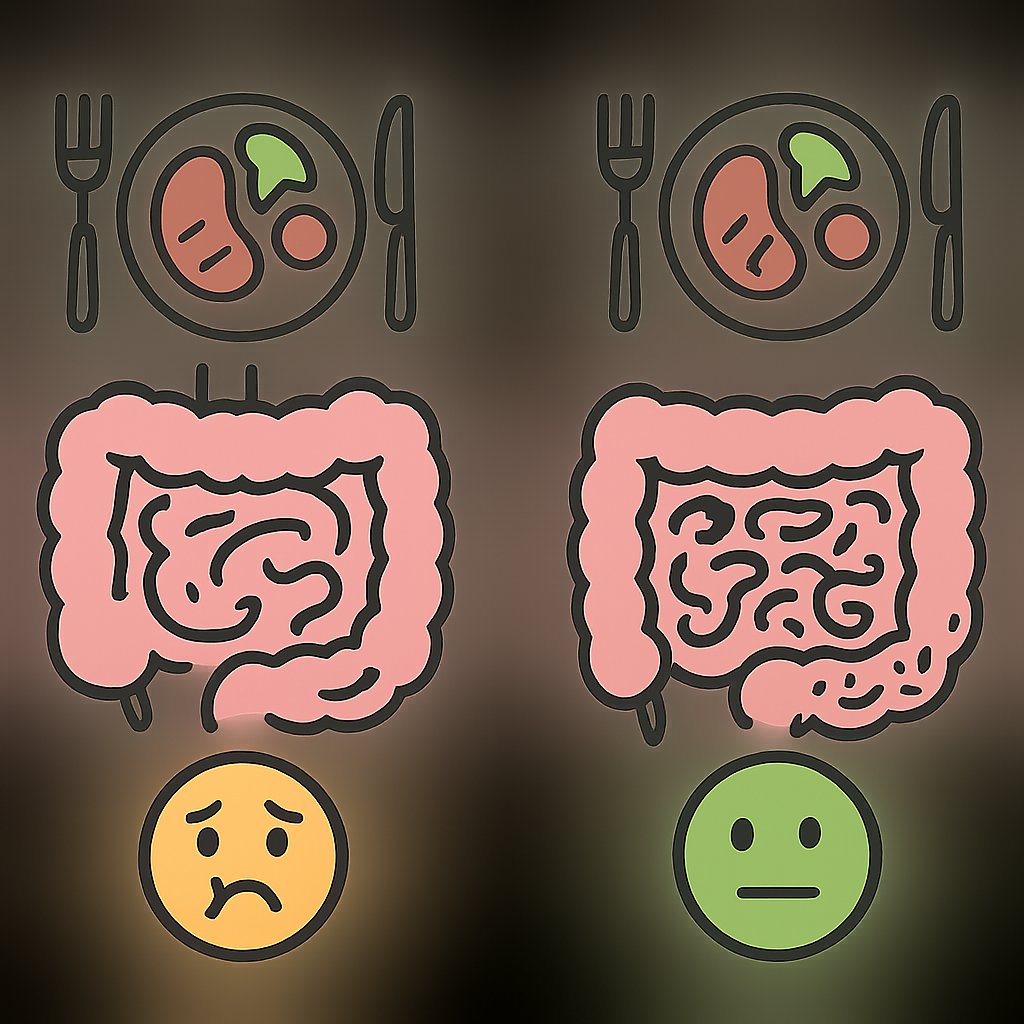
Here's why so much of the advice you find feels like it's arguing with itself.
Probiotics are a good example. When one Reddit thread swears probiotics fixed everything and another says they made things so much worse, both people might be telling the truth. They're just not living in the same gut, and the research isn't detailed enough yet to tell you in advance which one you are.
The same pattern shows up with food. The same diet can cause bloating in one person and noticeably calm it down in another, based on their specific microbiome composition and how fast or slow their gut moves things along. Large-scale microbiome mapping has found that no two people share more than a fraction of the same gut bacteria species, which is part of why a food that's fine for one person can be the trigger for someone else.
⚠️ Most studies behind gut health advice report averages across a study population. If a paper says a low-FODMAP approach "works" for IBS, it means it worked for a meaningful share of the people in that trial, not for everyone, and not necessarily for you.
And gut health doesn't operate in isolation. It's tangled up with hormones, the nervous system, stress, sleep, and the gut-brain axis, all of which shift the same intervention's effect from person to person, and even week to week in the same person. Dr. Emeran Mayer, a gastroenterologist and researcher at UCLA who studies the gut-brain connection, has written extensively about the gut behaving as an interconnected system rather than a set of isolated mechanisms. That's a big part of why a single protocol rarely produces the same result twice.
💡 Worth knowing: None of this means the information you've read is wrong. It usually means it's correct for the people it was tested on, and your job is figuring out whether you're one of them.
This is the part that's hard to accept when you're exhausted and just want a straight answer: gut health is context-dependent in a way most health topics aren't, and the contradictions you're running into are a symptom of that, not proof you're reading bad sources.
Why "Do More Research" Doesn't Solve This
The natural response to feeling confused is to go find more information. One more forum, one more practitioner's post. It feels productive. It usually isn't.
More information doesn't resolve context-dependency, it just adds more conflicting data points to the pile. You already have six opinions on probiotics. Reading a seventh source doesn't tell you which one applies to your gut. It just gives you a seventh opinion to weigh against the other six.
There's also a quieter trap: confirmation bias in self-research. When you're already leaning toward cutting out gluten, you notice the articles that confirm it and skim past the ones that don't, without meaning to. IBS clinical trials also routinely see placebo response rates around 30 to 40 percent, which is part of why a single "this worked for me" post is weak evidence on its own, even when the person is being completely honest.
⚠️ Every answer you find tends to open three new questions (should I test for mold, is it histamine, what about my vagus nerve), and each of those comes with its own pile of contradicting advice attached.
Someone who has read every SIBO and IBS thread on Reddit, has four different supplement protocols half-started in a drawer, and still can't say what's actually helping, isn't behind on research. They've done more of it than most people ever will. The research was never the missing piece.
🔎 If you're trying to figure out what your gut actually needs instead of reading one more contradicting article: Noorish builds a structured action plan based on your full symptom history, so you're working from your own picture instead of guessing which forum post applies to you. Start here →
What's actually missing is specific information about how your gut responds, not more general information about gut health, and that doesn't exist anywhere you can Google it.
What Actually Helps: Your Own Data
The information that actually moves things forward is data about your specific situation, not more gut health research in general, and the only way to get that is to generate it yourself.
Start by mapping your symptoms in more detail than "I'm bloated." When does it happen. How many hours after eating. Is it bloating-bloating or pain-bloating. Does it come with urgency, constipation, or neither... (Food is rarely the only variable worth tracking, either.)
A controlled self-experiment looks different from just trying things randomly. It needs a few pieces in place:
- A baseline (a few days of tracking before you change anything)
- One variable at a time (not cutting dairy, gluten, and starting a new probiotic in the same week)
- A defined trial window, long enough to see a real effect, short enough to actually finish it (more on how long to give an intervention)
- Success criteria you set before you start, not after, so you're not just deciding in hindsight that it "kind of helped"
💡 This doesn't mean ignore the research. It means using it to decide what's worth testing, not treating it as the final answer on its own.
If that sounds like where you already are, here's how to actually pull it all into one place. This is the gap a tool like Noorish is built for: turning self-experimentation into something structured instead of something you're holding together across a notes app, a Reddit history, and your memory. Self-tracking gut symptoms only works if the tracking is consistent enough to actually show a pattern, which is hard to pull off alone.
Someone who tracks one variable for three weeks with an actual baseline ends up with more usable information than someone who reads fifty more articles in that same three weeks.
Conclusion
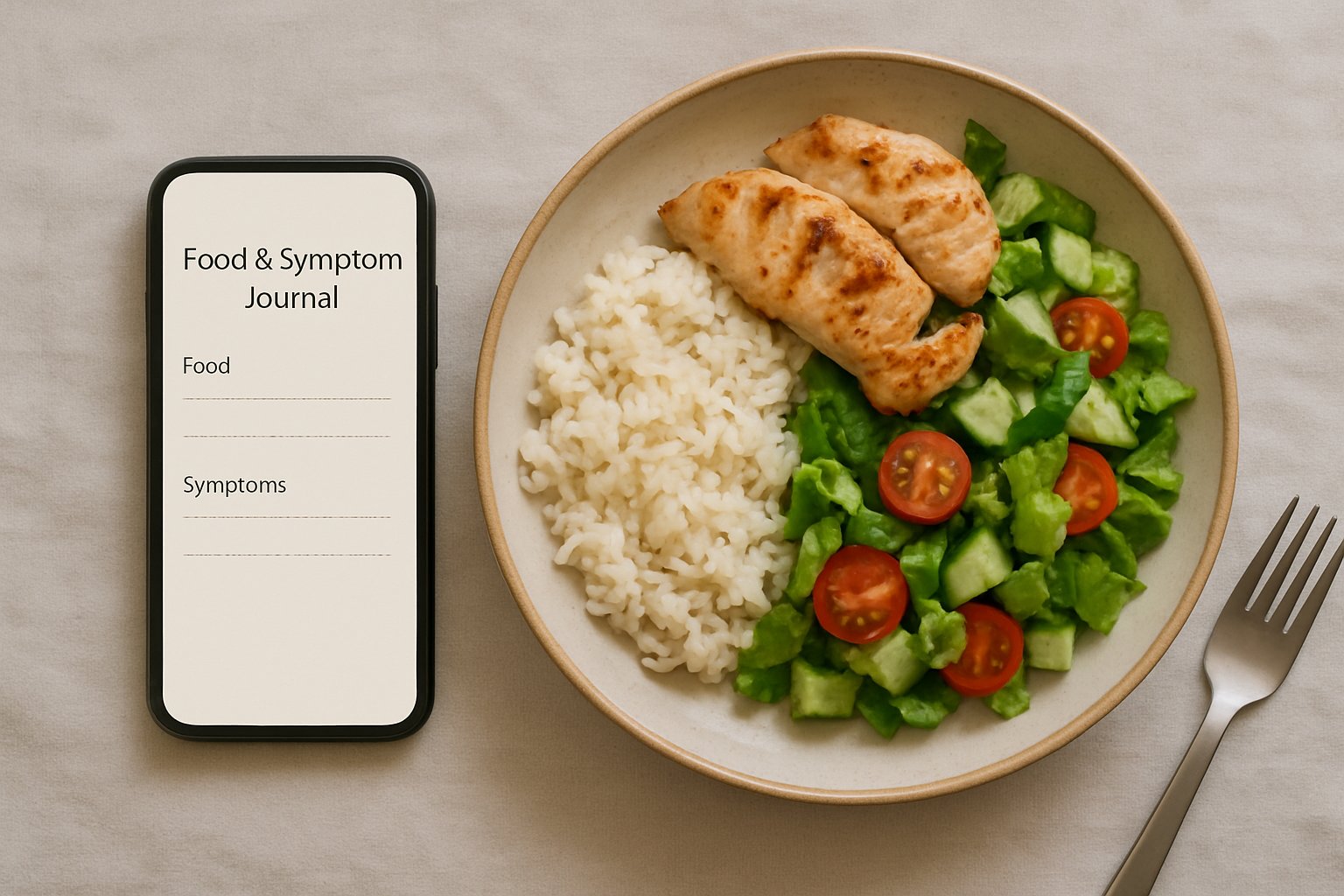
The shift that actually helps is changing what you're trying to figure out, from "what helps gut health in general" to "what helps my gut, specifically, based on evidence from my own body."
That reframe takes some of the pressure off: you're running the wrong kind of search, not failing to find the right answer in a sea of conflicting advice. General research answers general questions. Only your own data answers the one you actually have.
Next time you feel the pull to open one more tab, one more thread, one more "what worked for me" post, try redirecting that energy into tracking instead. Three weeks of writing down what you ate, what happened, and when will tell you more than three more months of reading.
🔎 Noorish: Gut Health Action Plan
Stop researching gut health in general and start figuring out your own gut, specifically.
- ✅ Build a structured gut symptom history to share with your doctor
- ✅ Understand what's actually driving your symptoms
- ✅ Get a science-based action plan for what to try next
- ✅ Optional: validation from a real nutritionist
If this sounds familiar, follow along on Instagram for more on what actually moves things versus what just adds noise.
Why is there so much conflicting information about gut health?
Because gut health is genuinely context-dependent. The same intervention can affect different SIBO subtypes differently, and even the subtype-specific claims that circulate online (probiotics being a common example) are often more anecdotal than confirmed by research. Most studies report averages across a group, not a guarantee for any one person, so two pieces of advice can both be accurate and still contradict each other.
How do I know which gut health advice to follow?
Honestly, you mostly can't know in advance. What you can do is treat any piece of advice as something worth testing rather than something to trust outright: track a baseline, change one thing, and watch what actually happens in your own body over a few weeks.
Is gut health research reliable?
Most of it is reliable for what it actually measured: average outcomes across a study population. The unreliability shows up when that average gets applied to an individual without checking whether the individual matches the group it was tested on.
Why does gut health advice never seem to work for me?
It might be working for the average case it was tested on and just not matching your specific situation. SIBO subtype, microbiome composition, motility, stress levels, and hormones all change how the same advice plays out, so "this didn't work" is often "this didn't work for my particular combination."
How do I stop feeling overwhelmed by health information?
Stop trying to resolve the overwhelm by reading more. Pick one thing to test, track it properly for a few weeks with an actual baseline, and let that answer replace the search for one. The overwhelm tends to ease once you're generating your own data instead of collecting other people's.
What is the most evidence-based approach to gut health?
Using published research to decide what's worth testing, then running a controlled, one-variable-at-a-time experiment on yourself to see whether it actually applies to your case. The evidence base tells you where to start. It can't tell you how your specific gut will respond.