
What to Actually Ask ChatGPT Between Nutritionist Visits
Sunday night before my monthly check-in, I do the same thing every time: sit down with my notes app and try to piece together the last four weeks. Half of it turns out to be stuff I already asked ChatGPT and sorted out myself.
I used to bring everything to my nutritionist, that meant I'd spend thirty minutes of a one-hour session re-explaining a concept instead of talking about what actually mattered. Now I sort things before I walk in, and the appointments are a completely different conversation.
Below are specific examples of what's fine to type into ChatGPT the week it comes up, and what goes on the list for the practitioner instead.
Fine to ask ChatGPT
Challenging what your nutritionist just told you is one of the most useful things you can do with ChatGPT, and it's more normal than it sounds. There are as many opinions as there are nutritionists, so it's genuinely useful to know what the alternatives are. Practitioners also make mistakes, or give advice that was right for their last ten clients but not quite right for you. Whatever ChatGPT says back, bring it to your practitioner or run it past someone else. You're not trying to catch her out, you're just making sure one opinion doesn't become gospel.
Timing and dosage questions for supplements are fair game, if you haven't already discussed it with your practitioner. "Should I take magnesium glycinate with food or on an empty stomach" is a fine ChatGPT question. Anything medication-adjacent is a different category (more on that below).
Spotting a pattern across the week: "Here's what I ate and how I felt each day this week, do you notice anything that repeats?"
Meal ideas and swaps within a plan you already have are exactly what a chatbot is decent at. If your nutritionist put you on a low-FODMAP structure and you're bored of the same six meals, asking for swaps that fit the same framework saves everyone time.
Prepping questions ahead of an appointment: instead of showing up and trying to remember what confused you three weeks ago, you can draft the actual questions in advance.
Explaining a term or mechanism you didn't fully catch is a good one too. If your nutritionist mentions "motility" or explains a process you nodded along to without really understanding, that's exactly the kind of thing ChatGPT is built to explain well, because it's education, not a decision about your case.
Someone whose nutritionist just said "try a low-histamine trial for two weeks" and walked out without a clear sense of what that actually means day to day is a good example of this whole category. Asking ChatGPT to explain the mechanism, suggest compliant meals, or list common high-histamine foods to avoid fills that gap without replacing the person who made the call in the first place.
Save for the practitioner
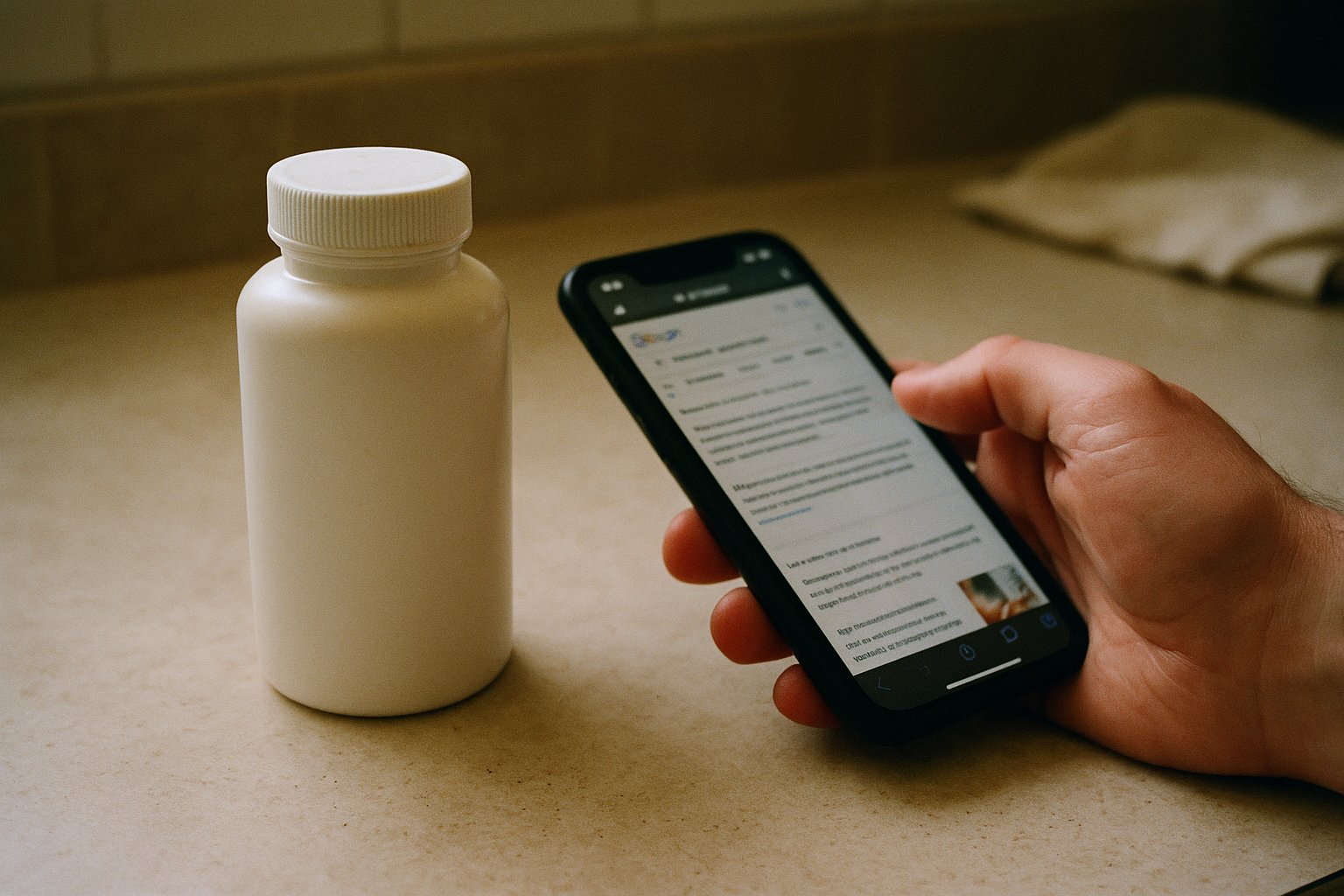
Anything medication-adjacent goes straight to your doctor or nutritionist. That includes drug interactions, whether to adjust a prescription, or anything where a wrong answer could actually hurt you.
Symptoms that contradict what your current plan assumes are the clearest signal to stop and bring it to your practitioner. If you're three weeks into a protocol and something new and worse shows up, that's not a "let me ask ChatGPT first" moment.
⚠️ Watch out: The riskiest habit isn't asking ChatGPT the wrong question, it's treating its answer as final instead of bringing it back to a real person who knows your case.
🔎 Noorish builds a structured gut symptom history from what you're already tracking, so you walk into appointments with an organized record instead of a foggy memory. Start here →
Research on doctor-patient communication backs up why this sorting matters: patients who bring a written list of prepared questions to an appointment ask roughly twice as many questions and retain more of what's discussed. The same logic applies to a nutritionist visit. Time is limited, and knowing what to save for it makes the time you do get actually count.
My appointment prep routine
If I try a new food and something feels off, I'll ask ChatGPT to help me connect it to what I already know instead of guessing cold. If a term comes up that I didn't fully get, I ask right then instead of nodding and forgetting to ask later.
By the time my appointment rolls around, I've usually got four or five things that got resolved on their own during the week, and two or three that clearly need my practitioner's opinion. That second list is what I actually bring in.
Private nutrition consultations typically run $50 to $200 per session depending on whether it's an initial visit or a follow-up. At that price, spending the first 30 minutes on recap instead of decisions is expensive.
This is where having somewhere to actually capture things as they happen matters more than the sorting logic itself. Noorish gives you a place to log symptoms and questions as they come up through the week, so by the time you're prepping for an appointment, the sorting is mostly already done instead of something you're trying to reconstruct from memory on a Sunday night.
Conclusion
This isn't about picking a winner between AI and your nutritionist. It comes down to using both without wasting either one. ChatGPT is good at the stuff that doesn't need your full history, like explaining a concept or suggesting a meal swap. Your nutritionist is worth paying for the stuff that does: anything medication-related, anything personalized to your labs, anything that contradicts what your plan assumes. Sorting the two before you walk in is the whole trick.
🔎 Noorish: Gut Health Action Plan
Stop showing up to appointments trying to remember what happened. Build a sorted, structured record instead.
- ✅ Build a structured gut symptom history to share with your doctor
- ✅ Understand what's actually driving your symptoms
- ✅ Get a science-based action plan for what to try next
- ✅ Optional: validation from a real nutritionist
Follow along on Instagram for more of this kind of practical, no-hype gut health stuff.
FAQ
Is it safe to ask ChatGPT about my diet?
For general education and meal ideas within a plan you already have, generally yes. For anything specific to your medical situation or labs, treat its answer as a starting point to bring back to a professional, not a final answer.
Can AI help me understand my nutritionist's advice?
Yes. If she mentions a term or a mechanism you didn't fully catch, asking a chatbot to explain it in plain language is a good use of it, since you're getting education, not a new decision about your case.
What are the risks of using ChatGPT for nutrition advice?
The biggest risk isn't asking a bad question, it's treating the answer as final instead of running it past someone who actually knows your history. Research on AI-generated diet plans has also found they often fall short of actual nutrient targets and don't personalize well to chronic conditions, which is exactly why anything specific to your case still needs a person.