
SIBO Came Back. Here's What That Usually Means
You finished your second round of antibiotics, felt genuinely good for about six weeks, and then the bloating showed up again on a random Tuesday like it had never left. You just assume you did something wrong.
If SIBO keeps coming back after treatment, it almost always means one thing: the overgrowth got treated, but whatever let it build up in the first place never did. This post walks through the three most common upstream causes behind SIBO recurrence, and a simple way to figure out which one is probably yours based on how and when your symptoms came back. (Not sure it's SIBO in the first place? Here's a self-triage for figuring out what's behind post-meal bloating.)
Why SIBO Comes Back: The Short Version
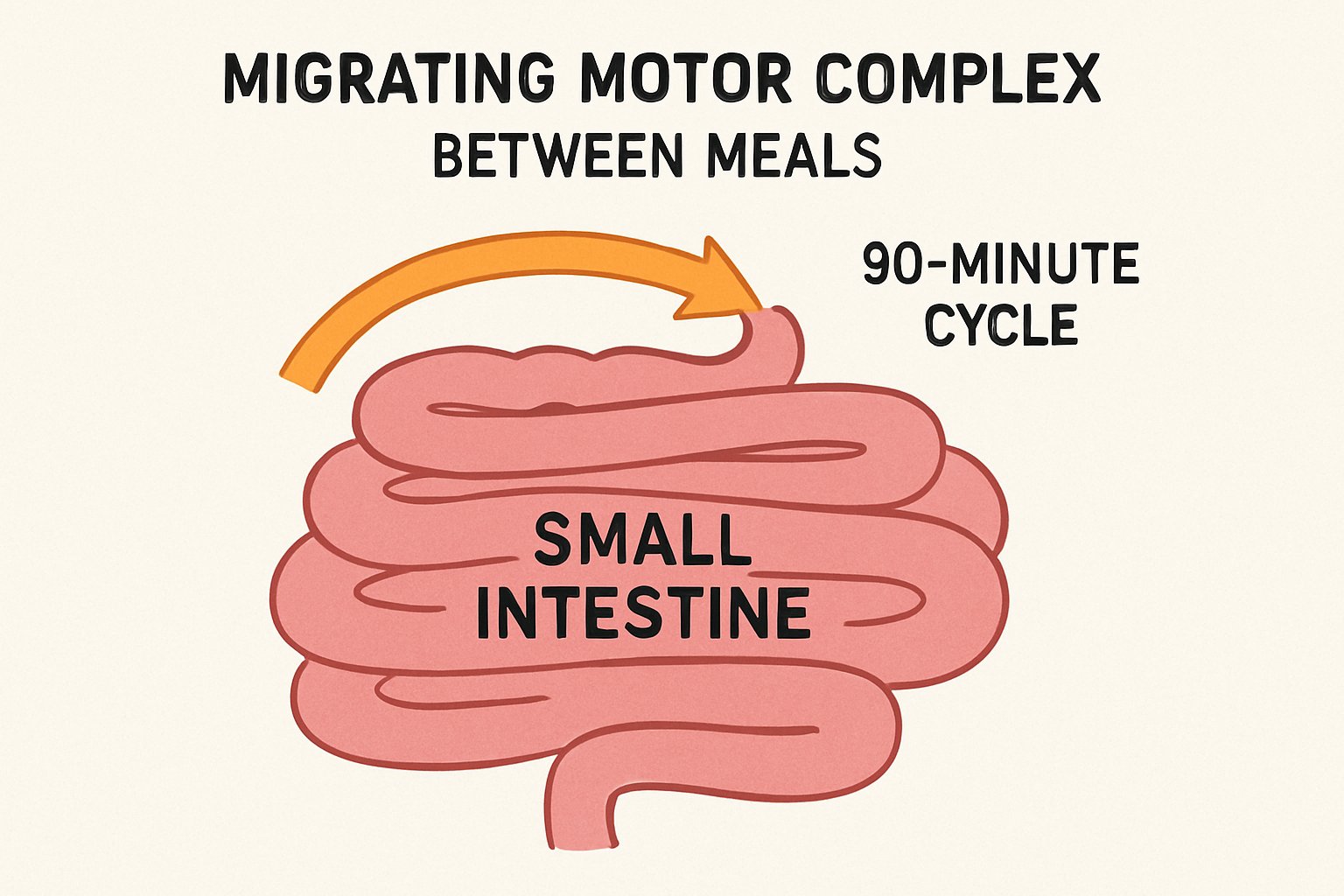
Your small intestine isn't supposed to have much bacteria hanging around. Between meals, a wave of muscle contractions called the migrating motor complex (MMC) sweeps it clean, roughly every 90 minutes during fasting. That's the mechanism keeping bacterial levels low in a part of the gut that isn't built to host them.
Antibiotics or herbal protocols clear out the overgrowth itself. They don't touch the reason bacteria built up there in the first place. If the MMC is impaired, if stomach acid is too low, if there's a structural issue like adhesions or a sluggish ileocecal valve, the small intestine goes right back to being a place bacteria can accumulate again. (Here's the fuller sequence worth following right after treatment, prokinetics and probiotic timing included.)
The Three Most Common Upstream Causes
Lauritano et al. found SIBO recurred in about 44% of people within 9 months of an otherwise successful rifaximin protocol (source: Lauritano et al., American Journal of Gastroenterology). That's not a small number, and it's not because the antibiotic "stopped working." It's because most cases have one of three things going on underneath.
1. MMC Dysfunction (Motility Issues)
The MMC is supposed to sweep the small intestine clean between meals, every 90 minutes or so while you're fasting. When it's impaired, that sweep either doesn't happen or doesn't happen fully, and bacteria start rebuilding almost immediately.
Someone whose symptoms get worse when they graze all day instead of eating actual meals with gaps between them (giving the MMC a chance to do its job) is a pretty classic sign. So is slow transit, or a history of food poisoning, since post-infectious IBS is one of the biggest known risk factors for motility-driven SIBO.
What's worth investigating: prokinetic agents, meal spacing, whether fasting windows actually help or make things worse for you specifically.
💡 Motility-driven recurrence tends to show up within weeks to a few months of finishing treatment, especially around a stressful period or a diet change. If your relapse tracks with a stretch of chaos or bad sleep, that's a clue.
2. Low Stomach Acid
Stomach acid is one of the main barriers keeping bacteria from migrating up into the small intestine in the first place. When it's too low, that barrier is basically thinner than it should be.
Symptoms worse after big or protein-heavy meals, a history of long-term PPI use, or burping and reflux alongside the usual SIBO symptoms all point here. This one tends to build gradually rather than hit all at once.
What's worth investigating: tapering off PPIs with medical guidance if you're on one, or looking into HCl supplementation. Not something to just start on your own, but worth raising with whoever you're working with.
3. Incomplete Protocol
Sometimes it's not really a recurrence. The first round just didn't fully clear the overgrowth to begin with.
Felt noticeably better at first, but symptoms never fully went away? Or they came back within 2-4 weeks, way faster than the timelines above? That's usually this one, not a new upstream cause developing out of nowhere.
What's worth investigating: retesting after the right washout period, and whether the original protocol actually matched your gas type. Hydrogen, methane, and hydrogen sulfide SIBO don't all respond to the same treatment, and a mismatch here is more common than people realize.
💡 Worth knowing: Methane-dominant SIBO (technically intestinal methanogen overgrowth) is notoriously under-treated by standard rifaximin-only protocols, since methanogens usually need a second agent added in.
| Upstream cause | Typical relapse timing | Key clue |
|---|---|---|
| MMC dysfunction | Weeks to a few months | Worse with grazing, stress, or slow transit |
| Low stomach acid | Gradual | Worse after big/protein meals, PPI history |
| Incomplete protocol | Within 2-4 weeks | Never fully resolved, or gas type mismatch |
🔎 If you're trying to figure out which one of these is actually yours: Noorish builds a structured action plan from your full symptom and treatment history, so you're working from your actual pattern instead of guessing. Start here →
How to Figure Out Which One Is Yours
You don't need a lab test to get a strong guess here. Your own timeline already has most of the answer in it.
Start with your relapse timeline. Quick return, within 2-4 weeks, leans toward incomplete treatment. Moderate return, weeks to a few months, leans toward motility. Slow, gradual creep leans toward stomach acid or some other ongoing environmental factor that never got addressed.
Then look at your symptom profile. What actually changed between the clear period and when symptoms came back? Did you go back to grazing? Skip a prokinetic you'd been on? Start a new medication? Stress spike? These aren't just background noise, they're often the actual trigger.
Then your history. Post-infectious IBS, long-term PPI use, known slow transit: any of these point pretty directly to one of the three causes above.
Writing this down somewhere, instead of trying to hold the whole timeline in your head, is what makes it possible to actually have a targeted conversation with a practitioner instead of restating your whole story from scratch. That's the gap Noorish is built for: turning your symptom and treatment history into something structured enough to spot the pattern, instead of guessing at week five whether this is the same problem resurfacing or something new.
| Your pattern | Likely cause |
|---|---|
| Back within 2-4 weeks | Incomplete protocol or gas type mismatch |
| Back in weeks to months, worse with grazing/stress | MMC dysfunction |
| Gradual creep, worse after big meals | Low stomach acid |
Conclusion
The phrase "SIBO just keeps coming back" hides what's actually going on. The first round treated the bacteria, not the reason the bacteria built up in the first place. Once you know which of the three upstream causes matches your pattern, motility, stomach acid, or an incomplete first protocol, the next step stops being a guess. (This is one version of a broader pattern worth recognizing — here's how it fits alongside the other ways a gut protocol can stop working.)
🔎 Noorish: Gut Health Action Plan
Stop guessing why SIBO keeps coming back. Get a plan based on your actual pattern.
- ✅ Build a structured gut symptom history to share with your doctor
- ✅ Understand what's actually driving your symptoms
- ✅ Get a science-based action plan for what to try next
- ✅ Optional: validation from a real nutritionist
Why does SIBO keep coming back after treatment?
Usually because the treatment cleared the bacterial overgrowth but didn't address the upstream cause that let it build up, whether that's impaired motility, low stomach acid, or a structural issue. Fix the overgrowth without fixing the cause, and the conditions for recurrence are still there.
How do I stop SIBO from recurring?
Identify which upstream cause applies to you (motility, stomach acid, or an incomplete first protocol) using your relapse timeline and symptom pattern, then address that specifically rather than just repeating the same antibiotic or herbal round.
What is the SIBO relapse rate?
Lauritano et al. found recurrence in about 44% of people within 9 months of an otherwise successful rifaximin protocol (source: Lauritano et al., American Journal of Gastroenterology). It's common enough that it shouldn't feel like a personal failure.
Can SIBO be resolved permanently?
For a lot of people, yes, once the upstream cause is actually addressed rather than just the overgrowth itself. Motility issues, low stomach acid, and structural causes all have management approaches, though some (like chronic motility impairment) need ongoing maintenance rather than a one-time fix.
What causes SIBO to come back after antibiotics?
Most often it's one of three things: the migrating motor complex isn't sweeping the small intestine properly, stomach acid is too low to keep bacteria from migrating up, or the original protocol didn't fully clear the overgrowth (sometimes because of a gas type mismatch).
Should I do another round of antibiotics if SIBO comes back?
Worth figuring out which upstream cause is likely first. If it's motility or stomach acid, another antibiotic round without addressing that tends to just set up the next recurrence. If it looks like incomplete clearance, retesting and confirming the gas type before retreating is usually the better move.