
Anxious Right After You Eat? That Might Not Be 'Just Anxiety'
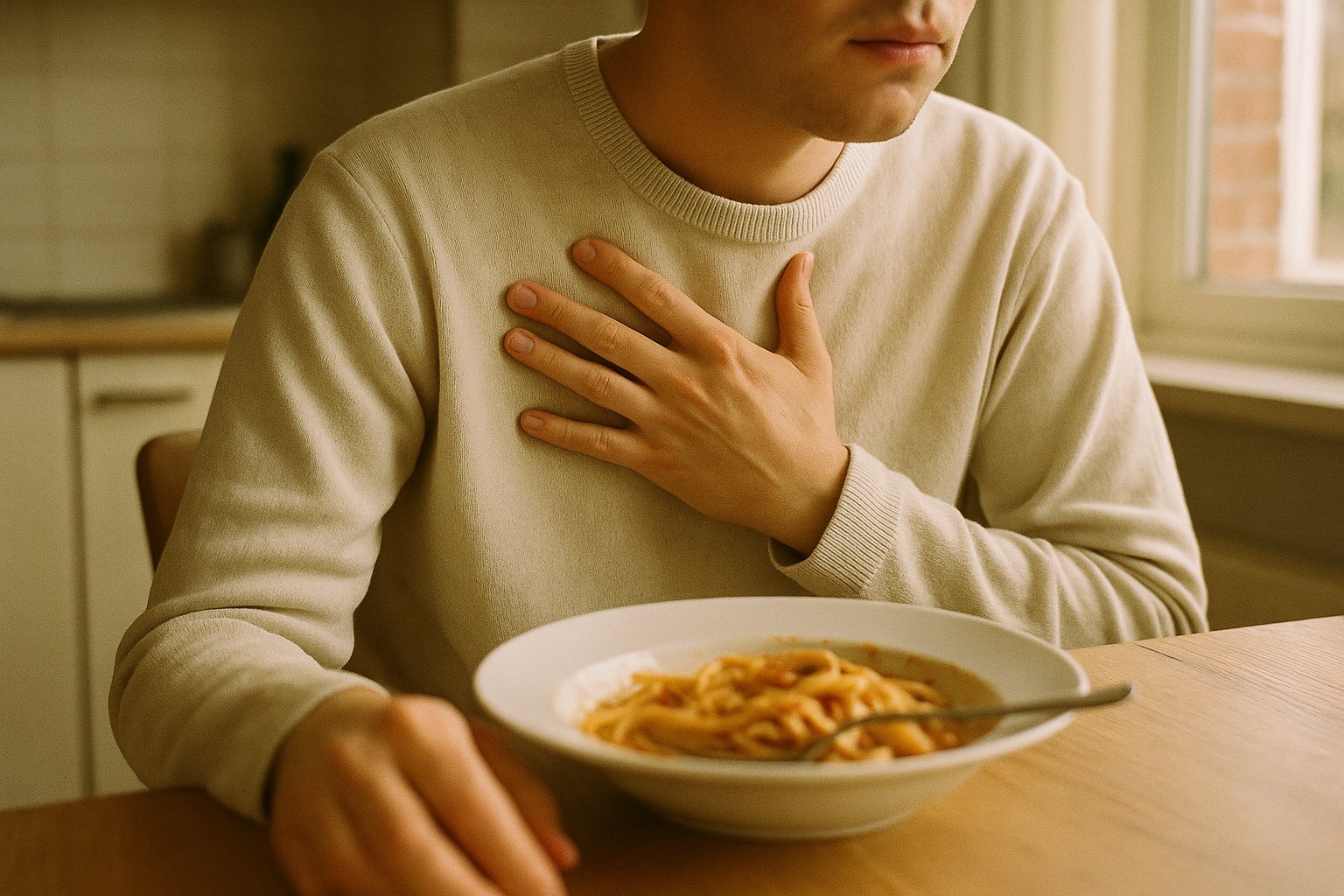
It started with a bowl of pasta: nothing dramatic, nothing I hadn't eaten a hundred times before. Then about twenty minutes later, my heart was racing, my chest felt tight, and I had that specific, familiar dread that something was wrong, even though nothing around me had changed. I called it a panic attack because that's what it looked like from the outside. It took me way longer than it should have to notice it only ever happened after I ate.
If you're anxious after eating, and someone (maybe a doctor, maybe just you) has already filed it under "anxiety" and moved on, I want to walk through the pattern I almost missed. Because the timing turned out to be the whole story.
Accepting the Anxiety Label
The anxiety explanation was easy to accept. I'd had stressful months, I was building a company, and "you're anxious" is a sentence that fits almost anyone's life if you say it with enough confidence. Not exhaustive, but that's basically what happened: a doctor heard "racing heart, tight chest, sense of dread" and reached for the most common explanation in the room.
Anxiety is a known thing. There are apps for it, breathing exercises, a whole vocabulary already built around it. Gut issues, by comparison, felt harder to explain and harder to fix. So I went along with it for longer than I probably should have.
The Pattern
The thing that eventually made me stop and actually look at what was happening: the anxiety wasn't random. It hit reliably about an hour to ninety minutes after eating, not scattered through the day like you'd expect from generalized anxiety. It happened across totally different meals, pasta, salad, a sandwich, so it wasn't one trigger food. And it wasn't just the racing heart and dread. There was bloating alongside it most times, occasionally reflux.
Once I started paying attention, the pattern was almost embarrassingly obvious in hindsight. It's just that nobody had ever asked me to look at timing specifically, including me.
Anxiety vs. Gut-Brain Signal: How to Tell the Difference
Here's the self-check I wish someone had handed me earlier. Still figuring this out, but these questions are the ones that actually moved me forward:
- Does the anxious feeling hit reliably in that post-meal window (roughly 60-90 minutes after eating), consistently, meal after meal?
- Does anxiety show up independent of food too, or does it only ever happen after eating?
- Is it paired with physical gut symptoms (bloating, reflux, cramping, constipation, loose stool), or is it purely in your head and chest with nothing going on digestively?
The fix is different depending on the answer. Treating anxiety directly (therapy, SSRIs, breathing techniques) helps some people, but if the root driver is gut-brain signaling tied to a specific meal response, those tools only address part of the picture.
The gut-brain axis is a real, well-studied communication line. Gastroenterologist and researcher Dr. Emeran Mayer, author of The Mind-Gut Connection, has written that "it's no coincidence that most patients with anxiety or depression also have abnormal gastrointestinal function" (source: Mayer, The Mind-Gut Connection). About 95% of the body's serotonin, a neurotransmitter that SSRIs (one of the most commonly prescribed classes of anxiety medication) work by targeting, is produced and stored in the gut, not the brain.
The numbers back up how common this overlap actually is. Anxiety affects roughly a third of people with IBS, and in about half of those cases, the gut symptoms show up first, with anxiety developing afterward, not the other way around. Research published in Gastroenterology has linked depression and somatization specifically to increased postprandial (after-eating) symptom severity in IBS. The vagus nerve, which carries the bulk of gut-to-brain signaling, is thought to be roughly 80-90% afferent, meaning most of that traffic runs from the gut up to the brain, not the other way around.
💡 Worth knowing: the Rome Foundation's Rome IV criteria formally recognize "postprandial distress syndrome" as a distinct pattern within functional dyspepsia, specifically tied to symptoms triggered by eating.
| Signal | Points toward generalized anxiety | Points toward gut-brain (postprandial) signal |
|---|---|---|
| Timing | Random, throughout the day | Reliably 60-90 min after eating |
| Trigger | Stress, situations, thoughts | Meals, regardless of food type |
| Physical symptoms | Mostly mental/emotional | Bloating, reflux, cramping alongside it |
| Pattern across days | Inconsistent | Repeats meal after meal |
⚠️ Watch out: Anxiety and gut symptoms can also feed each other in a loop, stress slows digestion, slow digestion produces discomfort, discomfort raises stress. The self-check above is about finding your starting point.
🔎 If you're trying to figure out what your gut actually needs: Noorish builds you a structured action plan based on your full symptom history, so you're not just guessing at what's anxiety and what's not. Start here →
Conclusion
The timing pattern is the clue that got buried under a label that felt reasonable enough to stop asking questions. Anxiety right after eating, showing up reliably in that post-meal window, across different foods, alongside physical gut symptoms, is a real signal worth taking seriously on its own terms, not just a variation of generalized anxiety that happens to show up near mealtimes.
🔎 Noorish: Gut Health Action Plan
Stop re-explaining your gut symptoms to a chatbot that forgets. Build one record that actually holds the pattern.
- ✅ Build a structured gut symptom history to share with your doctor
- ✅ Understand what's actually driving your symptoms
- ✅ Get a science-based action plan for what to try next
- ✅ Optional: validation from a real nutritionist
FAQ
Is anxiety after eating common?
Yes. Anxiety affects roughly a third of people with IBS, and postprandial (after-eating) symptom patterns are common enough that the Rome IV criteria formally recognize "postprandial distress syndrome" as its own category. If it happens to you reliably after meals, you're not imagining a pattern that isn't there.
What causes anxiety right after eating?
It can come from several places: the gut-brain axis sending signals from digestion to the brain, blood sugar swings after certain meals, or a genuine gut issue (like SIBO or IBS) producing gas and discomfort that the nervous system reads as alarm. About 95% of the body's serotonin is made in the gut, so gut activity has a direct line to how you feel emotionally.
Can IBS cause anxiety or panic attacks after meals?
Yes. Research has linked depression and somatization to increased postprandial symptom severity in IBS, and in about half of people who have both IBS and anxiety, the gut symptoms came first. The gut-brain connection runs in both directions, but a lot of it starts in the gut.
How long does anxiety after eating usually last?
For a gut-brain-driven pattern, it typically peaks somewhere in the 60-90 minute window after eating and eases within a couple of hours. If it's dragging on all day regardless of meals, that points more toward general anxiety than a postprandial signal specifically.
When should I see a doctor about anxiety after eating?
If it's happening consistently, especially alongside physical symptoms like bloating, reflux, or cramping, it's worth bringing up with a doctor and specifically asking about the timing pattern rather than just describing "anxiety." Also worth flagging urgently if you have chest pain that could be cardiac, unexplained weight loss, or symptoms that are getting worse over time.